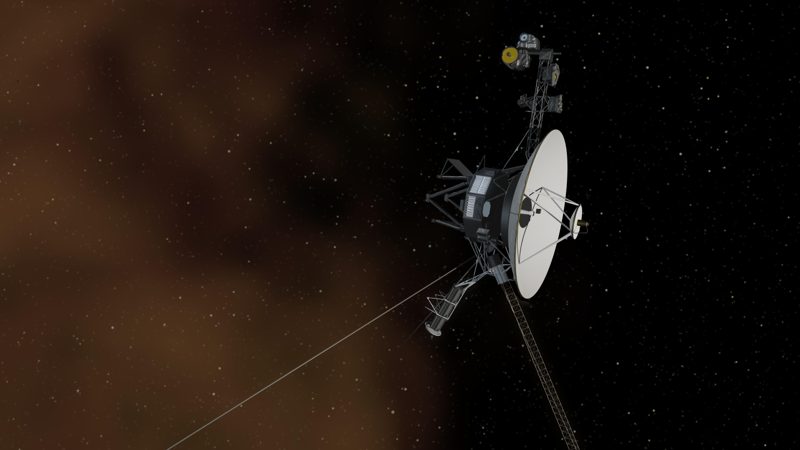
Planets & moons · 8 min read
What's Hiding Beneath Europa's Ice?
Jupiter's moon Europa hides a global ocean with twice the water of Earth's. How we know it's there, what could live in it, and the spacecraft on its way.
Europa. NASA/JPL-Caltech/SETI Institute
In this story
Nearly eight hundred million kilometres from the Sun, a small moon circles Jupiter. Its surface is a frozen shell of ice, colder than anywhere on Earth, and blasted by so much radiation that an unprotected person standing on it would be dead within days. It looks lifeless.
But beneath that ice, scientists are almost certain there is an ocean. A global ocean of liquid salt water, holding more than twice as much water as all of Earth's oceans combined. Dark, deep, and hidden for billions of years. It may be the best place in the solar system to look for life beyond Earth.
And right now, a spacecraft is on its way to find out what's down there. This is Europa.
Discovery
In January 1610, Galileo Galilei pointed a small telescope at Jupiter and noticed tiny points of light lined up beside it. Night after night, they moved. Sometimes on one side of the planet, sometimes on the other. They weren't stars. They were moons, circling another world. It was the first proof that not everything in the sky revolves around the Earth.
One of those four moons was Europa. For more than three and a half centuries, it was nothing more than a dot. Then, in 1979, the Voyager spacecraft flew past Jupiter, and Europa finally came into focus. What they saw was strange. A bright, smooth ball of ice, covered in long dark lines, criss-crossing the surface like cracks in an eggshell.
Europa is slightly smaller than our Moon. But unlike our Moon, it has almost no large craters. That was the first clue.
A surface that stays young
Every world in the solar system gets hit by asteroids and comets. Over billions of years, the scars pile up. Our Moon is covered in them. So when a surface has very few craters, it means something keeps wiping it clean. Scientists estimate that Europa's surface is only around forty to ninety million years old. In planetary terms, that's brand new. Some of the ice we see today may have formed after the dinosaurs were already gone.
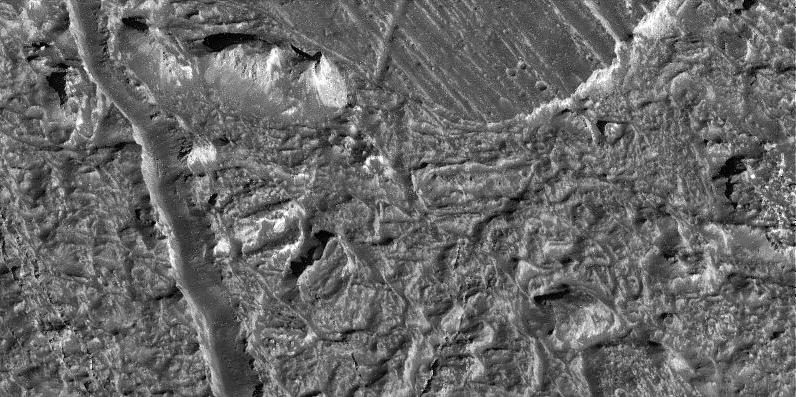
Something is constantly renewing it. Cracking it, shifting it, melting it, and freezing it again. And the closer we looked, the stranger it got. Long double ridges run across the surface for hundreds of kilometres. And in some places, called chaos terrain, the crust has shattered into giant blocks of ice that look like they broke apart, drifted, and froze again in new positions. Like icebergs, locked in a frozen sea.
On Earth, ice only behaves like that when it's floating on water.
Where the heat comes from
But how could water stay liquid this far from the Sun? Europa's surface sits at around minus one hundred and sixty degrees Celsius. The answer is Jupiter. Europa's orbit isn't a perfect circle. It's slightly oval. And it's kept that way by its neighbours. For every single orbit Ganymede makes around Jupiter, Europa makes exactly two, and Io makes exactly four. Those regular tugs never let Europa's orbit settle into a circle.
So as Europa swings closer to Jupiter, then farther away, the planet's enormous gravity squeezes it, and stretches it, over and over again. All that flexing creates friction deep inside the moon. And friction creates heat. It's like bending a paperclip back and forth until it gets warm.
On Io, the same process is so violent that it's the most volcanic world in the solar system. On Europa, it's gentler. But it may be just enough to keep an entire ocean from freezing.
Proof of the ocean
Suspecting an ocean is one thing. Proving it is another. In 1995, a spacecraft named after the man who discovered Europa arrived at Jupiter. NASA's Galileo probe would fly past Europa again and again over the next several years. Jupiter is surrounded by a gigantic magnetic field, and Europa moves through it constantly. As it did, Galileo's instruments noticed something remarkable. Europa was responding to Jupiter's field with a magnetic field of its own, one that flipped direction as Jupiter's field changed around it.
Ice can't do that. Rock can't do that. But a layer of salty, electrically conducting water can. The best explanation was a global ocean, hidden beneath the ice. Today, scientists estimate that ocean could be somewhere between sixty and one hundred and fifty kilometres deep. The deepest point in Earth's oceans is about eleven kilometres. Europa's ocean could be ten times deeper than that, everywhere.
In 2003, as Galileo ran low on fuel, NASA did something telling. They deliberately crashed it into Jupiter. The reason? They didn't want to risk it one day crashing into Europa and contaminating that ocean with microbes from Earth. That's how seriously scientists take the idea that something might be living there.
How thick is the ice?
The big question is how thick the ice is. Over the years, estimates ranged from just a few kilometres to more than thirty. And it matters. Thin ice would make it easier for material to move between the surface and the ocean below. Thick ice would seal the ocean off. In September 2022, NASA's Juno spacecraft flew just over three hundred and fifty kilometres above Europa's surface. And in a study published in late 2025, scientists used its microwave instrument to peer into the ice.
Their answer, at least in the region Juno saw, was around twenty-nine kilometres thick. That's more than three times the height of Mount Everest, made of solid ice. Juno also found tiny cracks and pores in the ice. But they were only centimetres across, and reached just a small fraction of the way down. That's a challenge. It means anything on the surface may have a very long, very slow journey to reach the water below.
But this was only one region. The ice could be thinner elsewhere, and the full picture is still unknown.
The ingredients for life
So could anything actually live there? As far as we know, life needs three things. Liquid water. A source of energy. And the right chemistry. Europa has the water. The other two are where it gets interesting.
In 1977, scientists exploring the floor of the Pacific Ocean found something nobody expected. Hot water venting from cracks in the seafloor, and around it, entire ecosystems. Tube worms, clams, and bacteria, thriving in total darkness, with no sunlight at all. Their energy came from chemicals in the water rising out of the rock. Europa's ocean is thought to sit directly on a rocky seafloor. And the same tidal heating that keeps the ocean liquid could be powering vents down there too. No one has seen them yet. But the conditions may be right. Then there's the chemistry.
In 2019, using the Hubble Space Telescope, scientists found evidence of sodium chloride on Europa's surface. Ordinary table salt, concentrated in a yellowish region called Tara Regio. It may have come up from the ocean below. In 2023, the James Webb Space Telescope found carbon dioxide on the surface too, concentrated in that very same region. Carbon is the backbone of every living thing we know. And it appears to have come from inside the moon. There's even a possible source of oxygen. Jupiter's radiation constantly splits the surface ice into hydrogen and oxygen. In 2024, Juno measured how much oxygen is being made. About twelve kilograms every second. Less than many scientists had hoped. And with ice this thick, getting it down into the ocean is a real problem.
So the ingredients may all be there. Whether they ever come together is the question.
The plumes
And there may be a shortcut. In 2012, Hubble spotted what looked like plumes of water vapour erupting from near Europa's south pole, reaching up to two hundred kilometres high. More possible sightings followed in 2016. In 2018, scientists went back to old Galileo data from 1997, and found a strange blip in its magnetic readings. It looked exactly like what you'd expect if the spacecraft had flown straight through a plume.
If Europa really is venting water into space, a spacecraft could fly through it and taste the ocean, without ever having to drill through the ice. That's exactly what happened at Saturn's moon Enceladus, where the Cassini spacecraft flew through giant water plumes and found salts and organic molecules inside. But on Europa, the evidence is much weaker. The plumes seem to come and go, many observations have found nothing, and some scientists aren't convinced they exist at all.
For now, Europa's plumes are a maybe.
Europa Clipper
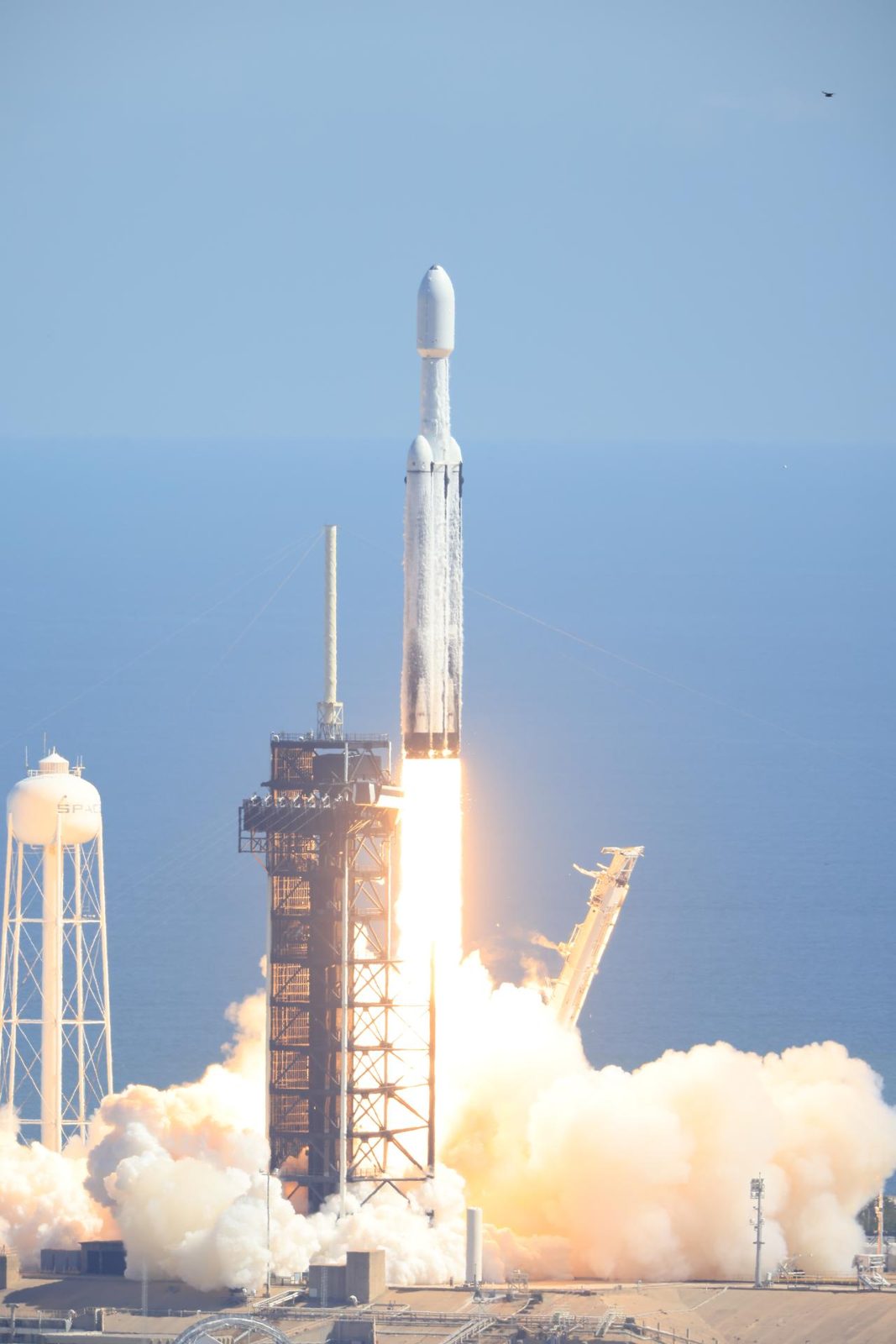
To settle all of this, NASA built the largest spacecraft it has ever sent to explore another planet. Europa Clipper launched on October 14th, 2024, on a SpaceX Falcon Heavy. With its solar arrays unfolded, it spans more than thirty metres, longer than a basketball court. It needs panels that big because at Jupiter, sunlight is around twenty-five times weaker than here on Earth. In March 2025, it swung past Mars to change course. In December 2026, it will fly past Earth one final time, stealing a little of our planet's speed to send it on to Jupiter.
It arrives in April 2030. But it won't orbit Europa. The radiation there is too intense. Instead, Clipper will orbit Jupiter, and dive past Europa again and again, around forty-nine times, coming as close as twenty-five kilometres above the ice, before retreating to safety. Its most sensitive electronics ride inside a thick-walled metal vault, to survive the radiation. On board are nine science instruments. Cameras to map the surface in detail. Ice-penetrating radar to search for pockets of water hidden inside the shell. Spectrometers to read the chemistry of the surface. A magnetometer to measure how deep and how salty the ocean is. And instruments that can sample dust and gas knocked off the moon, and taste any plume it flies through.
It's not designed to find life. It's designed to answer a simpler question first. Could Europa support it? And it's not going alone. The European Space Agency's JUICE spacecraft, launched in 2023, will reach Jupiter in 2031, and make two close passes of Europa of its own. Engraved on Clipper is a poem by the American poet Ada Limón, along with the word "water" in more than one hundred languages.
A message from one ocean world to another.
The answer
So what if there is life down there? It almost certainly wouldn't be fish, or anything we'd recognise. More likely, simple microbes, clinging to rocks in the dark. But that would change everything.
If life began twice, independently, in the same solar system, then life probably isn't rare at all. It might be everywhere, in every galaxy, on countless worlds we'll never see. And if Europa turns out to be empty? That would tell us something just as important. That water, energy, and chemistry aren't enough. That something about Earth really is special. Either way, we learn the answer to one of the biggest questions humans have ever asked.
Four hundred years ago, Galileo saw Europa as a tiny point of light beside Jupiter. Today, we know it may be hiding one of the largest oceans in the solar system. What's hiding beneath Europa's ice?
In 2030, we finally start to find out.
This article is adapted from our documentary.
Watch on YouTube