Planets & moons · 7 min read
How Venus Became Earth's Evil Twin
Venus is almost a perfect copy of Earth, yet its surface would crush and cook you in minutes. How Earth's twin became the most hostile planet we know.
Venus mapped by radar from Magellan. NASA/JPL
In this story
Our closest planetary neighbour is almost a perfect copy of Earth. Nearly the same size. Nearly the same gravity. Built from the same kind of rock.
And yet, if you stood on its surface, you would be crushed and cooked within minutes, beneath clouds made of acid.
This is Venus. The brightest planet in our sky, and one of the most hostile places we've ever found.
The morning and evening star
Look up just after sunset, or just before sunrise, and you'll often see it. A bright, steady light, brighter than anything in the night sky except the Moon.
The ancient Greeks saw it so often at dawn and at dusk that they thought it was two different stars. They called the morning one Phosphorus and the evening one Hesperus. It took centuries to realise they were the same world.
When telescopes finally pointed at Venus, they found nothing but clouds. A perfect, featureless veil. And because nobody could see beneath it, people imagined what might be there. Some scientists in the early nineteen hundreds pictured a warm, wet planet, covered in swamps and jungles. A younger version of Earth.
Twins on paper
On paper, the comparison made sense. Venus is about ninety five percent of Earth's width. It has about eighty percent of Earth's mass. If you stood on it, you'd weigh only a little less than you do at home.
Two rocky worlds, formed side by side, from the same materials. Venus should have been a second Earth.
It isn't.
A day longer than a year
Start with time itself. A single turn of Venus on its axis takes two hundred forty three Earth days. A full lap around the Sun takes only two hundred twenty five. So on Venus, a day really is longer than a year. And it turns the wrong way, opposite to almost every other planet. Nobody knows for sure why. A giant impact long ago may have flipped it, or the drag of its own heavy atmosphere may have slowed it to a crawl.
Put those two motions together, and one full day on Venus, from one sunrise to the next, lasts about one hundred seventeen Earth days. And when that slow sunrise finally comes, the Sun appears in the west.
But here's the strange part. While the ground barely turns, the sky races. The clouds at the top of the atmosphere whip around the entire planet in about four Earth days, with winds of around three hundred sixty kilometres per hour. The planet is slow. Its weather is not.
An ocean of air
That weather is unlike anything on Earth. About ninety six percent of the air is carbon dioxide. And there's so much of it that the pressure at the surface is more than ninety times what we feel at sea level. Standing there would be like diving nearly a kilometre under the ocean.
High above, between about forty eight and seventy kilometres up, sit the clouds. They aren't made of water. They're made of sulfuric acid. It does rain on Venus, but the rain is acid, and it never reaches the ground. The heat below boils it away long before it lands.
Hotter than Mercury
Those bright clouds bounce most of the sunlight back into space. That's why Venus shines so brightly in our sky. But the sunlight that does get through hits the ground and warms it. The ground then tries to release that heat, and the thick carbon dioxide traps it.
The result is a surface temperature of about four hundred sixty five degrees Celsius. Mercury sits much closer to the Sun, and yet Venus is hotter.
And it's that hot almost everywhere. Day side, night side, equator, poles. The atmosphere is so dense that it spreads the heat around evenly. On Venus there is no cool place to hide.
Getting there
So how do you explore a world like that?
The first visitor was NASA's Mariner two, which flew past Venus in nineteen sixty two. It was the first spacecraft ever to successfully study another planet up close, and its readings confirmed the surface was scorching.
The Soviet Union went further. It decided to land.
In nineteen sixty seven, Venera four parachuted into the atmosphere and sent back the first measurements from inside another planet's air. But the pressure was far worse than anyone expected. The probe was crushed before it reached the ground.
So the engineers built tougher landers. In nineteen seventy, Venera seven touched down and sent a faint signal from the surface for about twenty three minutes. It was the first spacecraft ever to transmit from the surface of another planet.
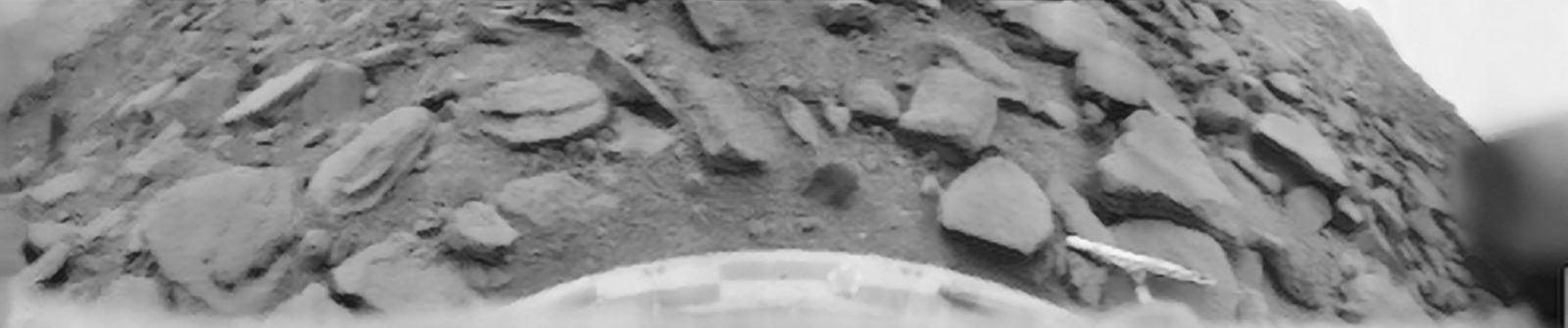
In nineteen seventy five, Venera nine sent back the first photographs from the surface of another world. Flat, broken rock, under a dim orange sky.
Then, in nineteen eighty two, came Venera thirteen. It was only designed to survive for about thirty two minutes. It kept working for one hundred twenty seven, before the heat and pressure finally killed it. In that time, it took the first colour photos of the Venusian surface and drilled into the rock to study it.
To see the whole planet, we needed a different trick. Between nineteen ninety and nineteen ninety four, NASA's Magellan orbiter used radar to see straight through the clouds. It mapped about ninety eight percent of the surface.
The surface
What it found was a world shaped by fire.
Venus is covered in volcanoes. One recent study of Magellan's maps counted around eighty five thousand of them. Some are tiny. Others are enormous. Maat Mons, the tallest, rises about eight kilometres above the surrounding plains.
And the surface is surprisingly young. Venus has far fewer impact craters than it should. That suggests lava resurfaced much of the planet within the last few hundred million years, wiping out older craters.
For decades, the big question was whether any of those volcanoes were still active. Then, in twenty twenty three, scientists re-examining old Magellan images spotted a volcanic vent near Maat Mons that changed shape over just eight months. In twenty twenty four, another team found signs of fresh lava flows in two more regions.
Venus may not just have been volcanic. It may still be erupting today.
Life in the clouds?
Which brings us to an even bigger question. Could anything live there?
Not on the surface. Nothing we know of could survive it. But about fifty to sixty kilometres up, inside the clouds, things are very different. The pressure there is close to Earth's at sea level, and the temperature can be mild. It may be the most Earth-like environment anywhere in the solar system, apart from Earth itself.
Back in nineteen sixty seven, Carl Sagan suggested that microbes might drift in those clouds. In twenty twenty, astronomers announced they had detected phosphine there, a gas that on Earth is linked to life. The news made headlines around the world.
But other teams couldn't confirm it. Some argued the signal was weaker than reported, or came from a different gas altogether. Today, the phosphine claim is still disputed, and life on Venus remains an open question.
Lost oceans
And that leads to the biggest mystery of all.
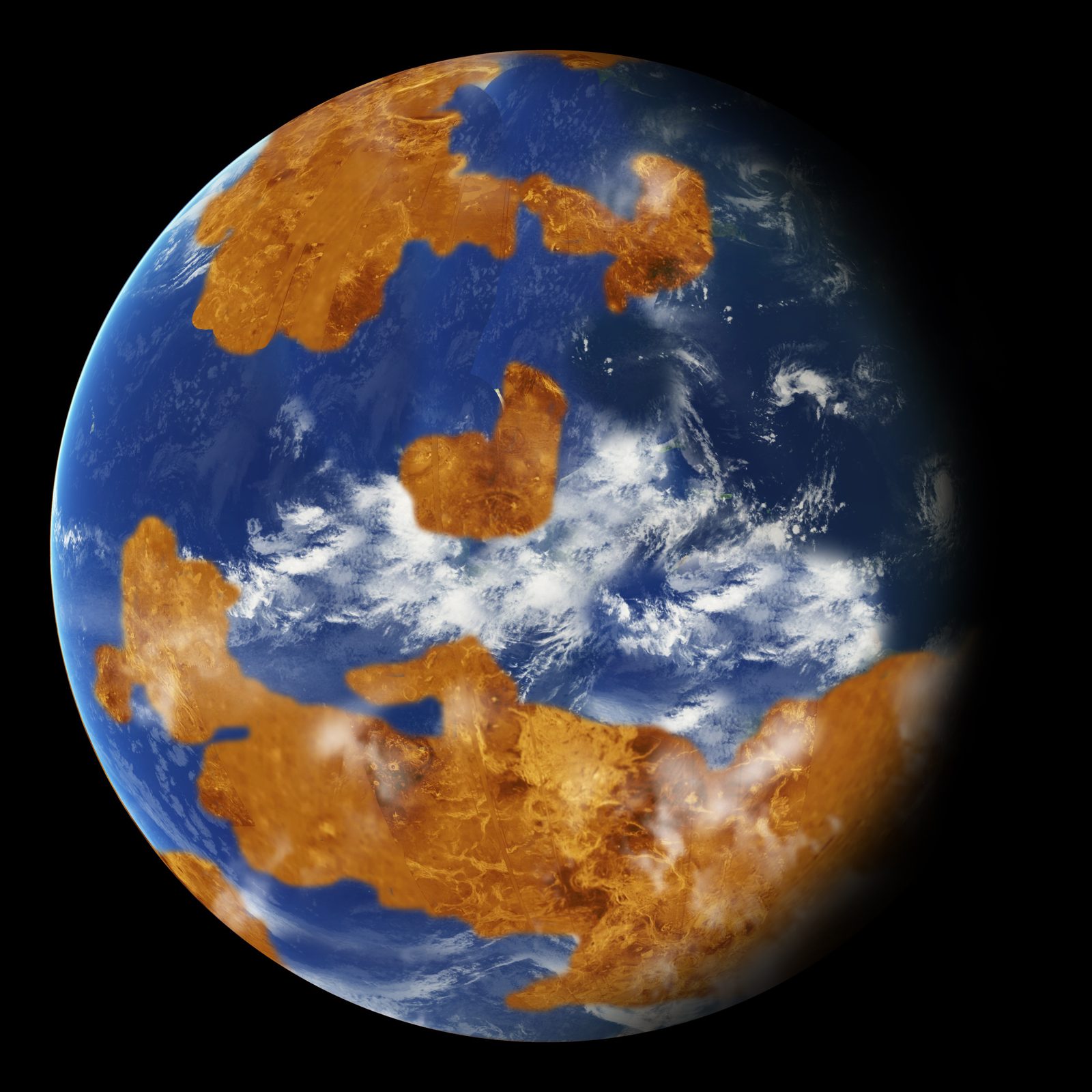
Some scientists believe Venus wasn't always like this. That long ago, it may have had oceans. A twenty sixteen NASA climate model suggested Venus could have had shallow seas and mild temperatures for billions of years, perhaps until as recently as seven hundred million years ago.
But not everyone agrees. A twenty twenty one study argued that young Venus was so hot that water vapour never cooled enough to rain down. In that version of history, Venus never had oceans at all.
Either way, at some point Venus tipped over the edge. As the Sun grew brighter, any water warmed and evaporated. Water vapour is a greenhouse gas, so it trapped more heat, which evaporated more water. The loop fed itself until the oceans, if they ever existed, were gone, and sunlight slowly broke the water apart.
Scientists call this a runaway greenhouse. And Venus is the clearest example we have.
What comes next
That's why so many scientists want to go back.
Japan's Akatsuki orbiter studied the Venusian weather for years before it fell silent and was officially retired in twenty twenty five. Now, new missions are being planned. NASA's DAVINCI would drop a probe through the atmosphere. NASA's VERITAS would map the surface in far greater detail. Both are planned for the twenty thirties, but their funding has been uncertain. Europe's EnVision orbiter is scheduled to launch in twenty thirty one.
If they fly, they could finally answer the questions Venus has kept hidden for so long. Did it ever have oceans? Are its volcanoes still active? Is there anything alive in its clouds?
Two sides of the same coin
Because the more we learn about Venus, the more it looks like a warning. Two planets, born side by side, from the same materials, at almost the same size. One became a world of oceans, forests and life. The other became a pressure cooker of acid and fire.
Venus shows us exactly how far a planet can fall.
And it's been sitting right next door the whole time.
This article is adapted from our documentary.
Watch on YouTube